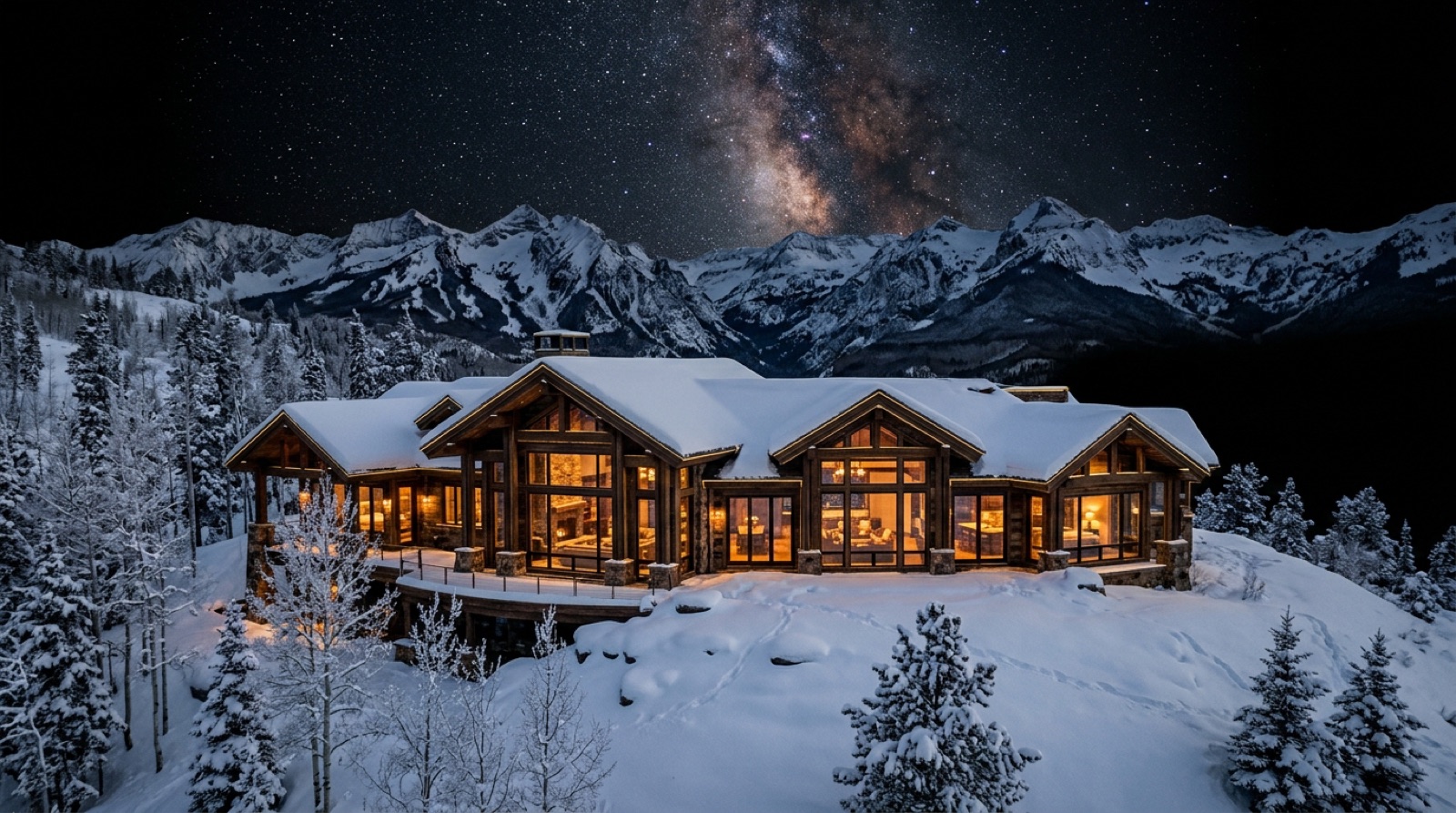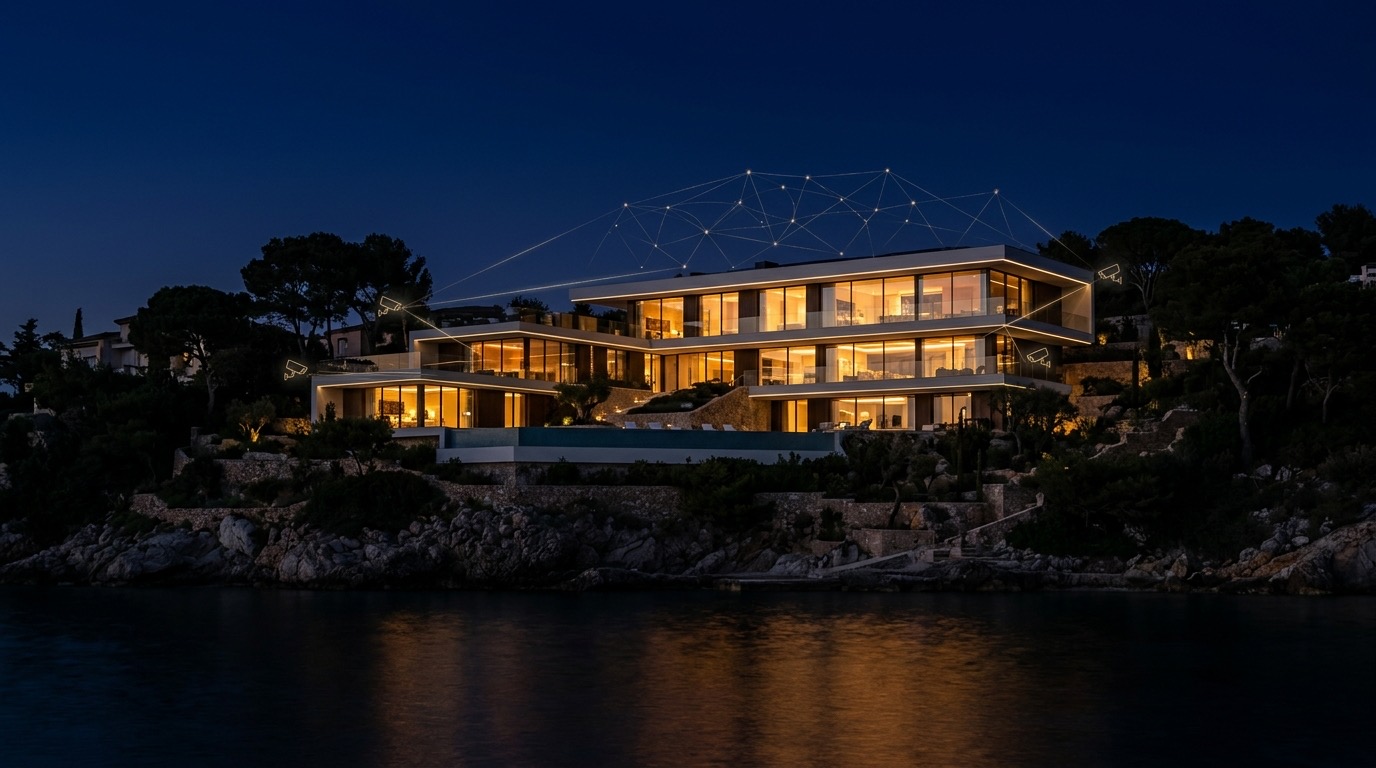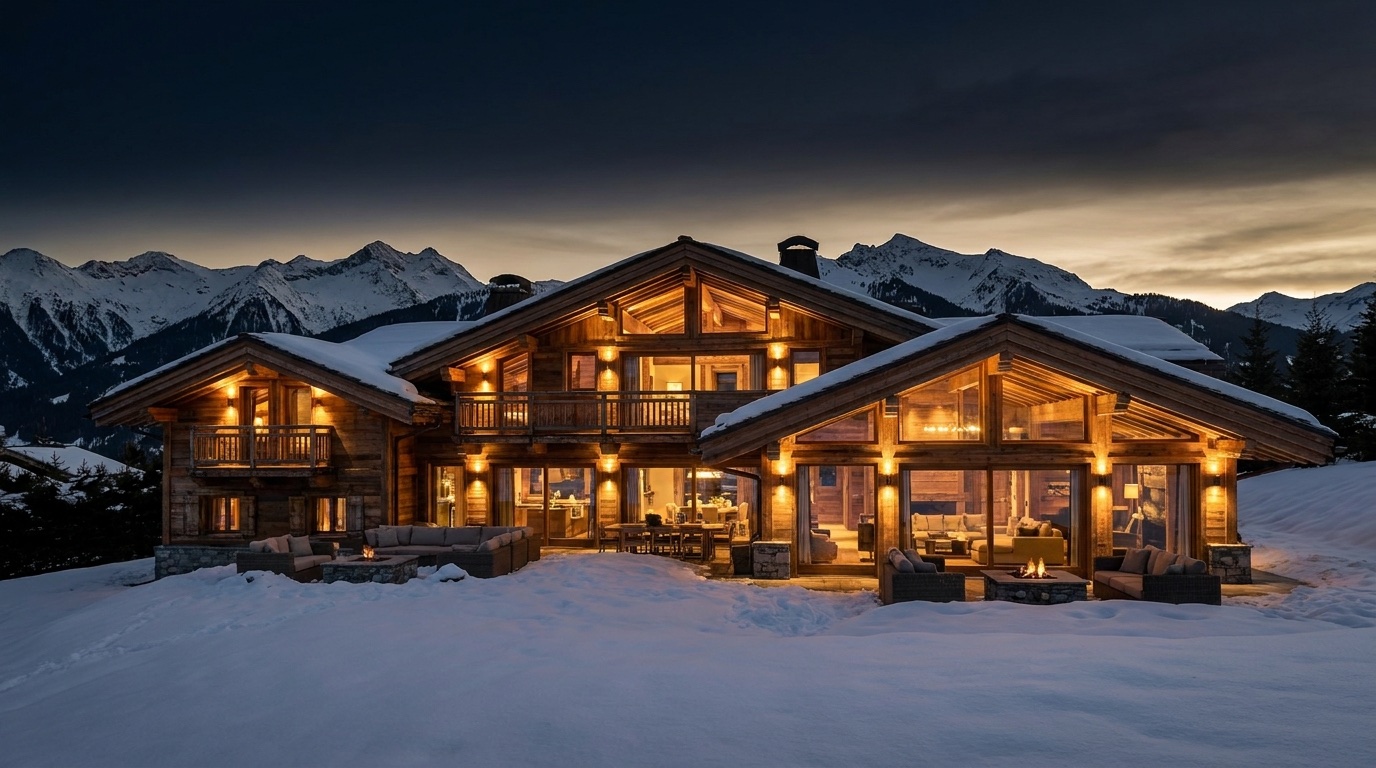
Private IT & Cybersecurity for St. Moritz & Engadin Chalets
On the Suvretta hillside, a chalet is a CHF 20 million-plus asset that lives intensely for one winter season and stands silent for the rest of the year. We engineer, monitor and defend what is inside it — to a Swiss standard of privacy.
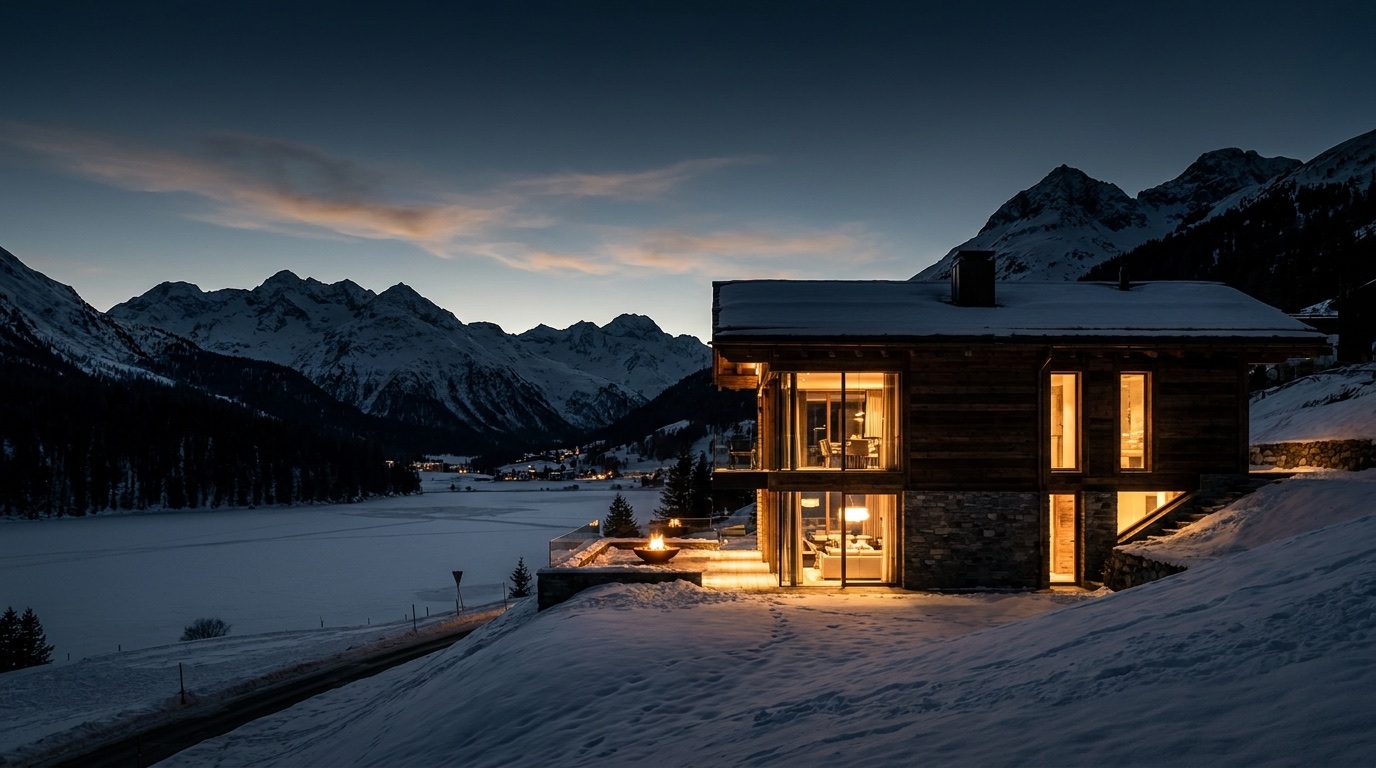
St. Moritz is, by most measures, the most expensive municipality in Switzerland — and the Suvretta hillside is its most expensive address. Prime chalets along Suvretta and Via Chasellas trade above CHF 35,000 per square metre, with the finest hillside villas reaching CHF 65,000, and whole properties routinely changing hands above CHF 20 million. Each February, more than 30,000 visitors descend on the frozen lake for the three Sundays of White Turf, joining the gourmet-festival crowd, the polo set and the households that have wintered in the Engadin for generations. For a few brilliant weeks, the valley is the most concentrated gathering of private wealth in the Alps.
Then the season ends, and the lights on the hillside go out. The Engadin's chalets are overwhelmingly second residences — Swiss federal law caps new second-home construction precisely because the share is so high — and a Suvretta property typically stands empty for eight months or more. What remains switched on is the technology: KNX automation buses, heating and snow-melt controls, cameras, network equipment, the staff entrance reader. A CHF 30 million chalet between seasons is not offline. It is online and unwatched, which is a very different thing.
The Eight-Month Silence
The traditional Engadin arrangement — a local caretaker, a Hauswart who airs the rooms, an electrician on call — was designed for pipes and shutters, not for connected systems. Nobody in that arrangement reads firewall logs, notices a camera quietly streaming to an unfamiliar address, or knows that the automation server's remote-access certificate expired in May. A private IT office places the chalet's entire connected estate under continuous remote monitoring: faults, failures and intrusion attempts surface within minutes in October exactly as they would in February. The principles are those of smart-home security for luxury estates, applied to a property whose defining condition is absence.
KNX, Done Properly
Where Aspen runs Crestron and Savant, the Engadin runs KNX — the European standard wired into virtually every serious Swiss chalet, governing heating, shading, lighting and energy. KNX is robust and vendor-neutral, but its security posture depends entirely on how the IP gateway between the bus and the network is engineered. In practice, many installations expose that gateway to the house network — or worse, to the internet — with default settings, because the electrical planner's job ended at commissioning. We audit the KNX topology, enable KNX Data Secure where the hardware allows, isolate gateways on a dedicated segment, and broker every integrator's remote session through monitored channels. The owner keeps the comfort; the bus stops being a back door. Households comparing this with American platforms will find our guide to Crestron, Savant and Control4 a useful contrast in philosophies.
Connectivity in a High Valley
At 1,800 metres, Swiss infrastructure is excellent — until the one fibre serving the hillside is cut by construction or the valley's mobile cells saturate during White Turf week, when 30,000 extra devices arrive at once. Our standard is layered: fibre as primary, a 5G path on a second operator as automatic failover, and a low-earth-orbit satellite link as the independent third leg, so cameras and monitoring never depend on a single line. A household that moves between the chalet, a yacht in the Mediterranean and a jet in between should expect one continuous, secured network experience across all three — the discipline at the heart of our superyacht and jet cybersecurity practice.
Season Staff, Guests & the February Surge
For ten weeks a Suvretta chalet operates like a small hotel: a chef brought in from Milan, chalet staff hired for the season, drivers, security, and a guest book that turns over weekly between White Turf Sundays and the gourmet festival. Every guest and every contractor arrives with devices. We build the household network in tiers — family, staff, guest — with individually issued, automatically expiring credentials, so the houseguest's phone and the caterer's tablet never touch the systems that run the property. When the season closes and the staff disperse to summer postings, access closes with them, completely and verifiably. This is the same credential governance we apply in our cybersecurity work for family offices; a great chalet in season is a family office with better views.
Cameras & the Swiss Expectation of Privacy
Swiss households hold a justifiably high standard of discretion, and Swiss law takes data protection seriously. Cameras on an Engadin property must protect without surveilling the family itself or the neighbours across Via Chasellas: recordings held on-premise or in Swiss-jurisdiction storage, retention deliberately limited, access logged, and no footage transiting a consumer cloud in another jurisdiction. Privacy is not a constraint on good security here — in the Engadin, it is the definition of it.
In St. Moritz, the measure of a household's technology is the same as the measure of its staff: present everywhere, visible nowhere, and absolutely silent about what it sees.
A Standard Worthy of the Address
Obsidian Helm operates as a by-invitation private technology, cybersecurity and AI office for UHNW principals, fully remote and under NDA, on foundations laid since 2014. For an Engadin chalet — on the Suvretta hillside, above Celerina, or anywhere in the high valley — an engagement typically covers a complete review of the network, KNX and camera estate, layered connectivity, staff and guest credential governance, and continuous monitoring through the long silent months. The chalet should be as faithfully kept in June as on the final Sunday of White Turf.
Begin With a Private Strategy Session
Engagements begin with a $4,999 Private Strategy Session — a confidential, under-NDA review of your St. Moritz or Engadin property's technology, KNX estate and security posture, with a written roadmap. The full fee is credited toward membership should you proceed.
Request Your InvitationFrequently asked
Is KNX home automation in Swiss chalets secure?
The KNX standard itself is mature, but security depends on the installation. Many chalets expose the KNX IP gateway to the household network or the internet with default settings. Properly engineered — with KNX Data Secure enabled, gateways isolated on their own network segment, and integrator access brokered and monitored — KNX is both secure and exceptionally reliable.
Who watches over a St. Moritz chalet's systems during the eight months it stands empty?
Traditionally a local caretaker checks the building, but no one monitors the connected systems — cameras, automation, network equipment — which remain online year-round. A private IT office provides continuous remote monitoring, so equipment failures, expired certificates and intrusion attempts are detected and handled within minutes, regardless of whether the family is in residence.
How should guest WiFi be set up in a chalet hosting White Turf house parties?
Use a tiered network: separate family, staff and guest zones, with guests receiving individually issued credentials that expire automatically after their stay. The guest network should be fast and gracious but completely isolated from cameras, automation and the family's devices, so a weekend's worth of visiting phones never touches the systems that run the property.
Do Engadin chalet cameras need to comply with Swiss privacy law?
Yes. Swiss data-protection rules and local norms require restraint: cameras should cover the property without capturing neighbours or public ways, recordings should be stored on-premise or in Swiss jurisdiction, retention should be limited, and access logged. Done well, this discipline strengthens security rather than weakening it — fewer copies of footage means fewer ways to lose it.