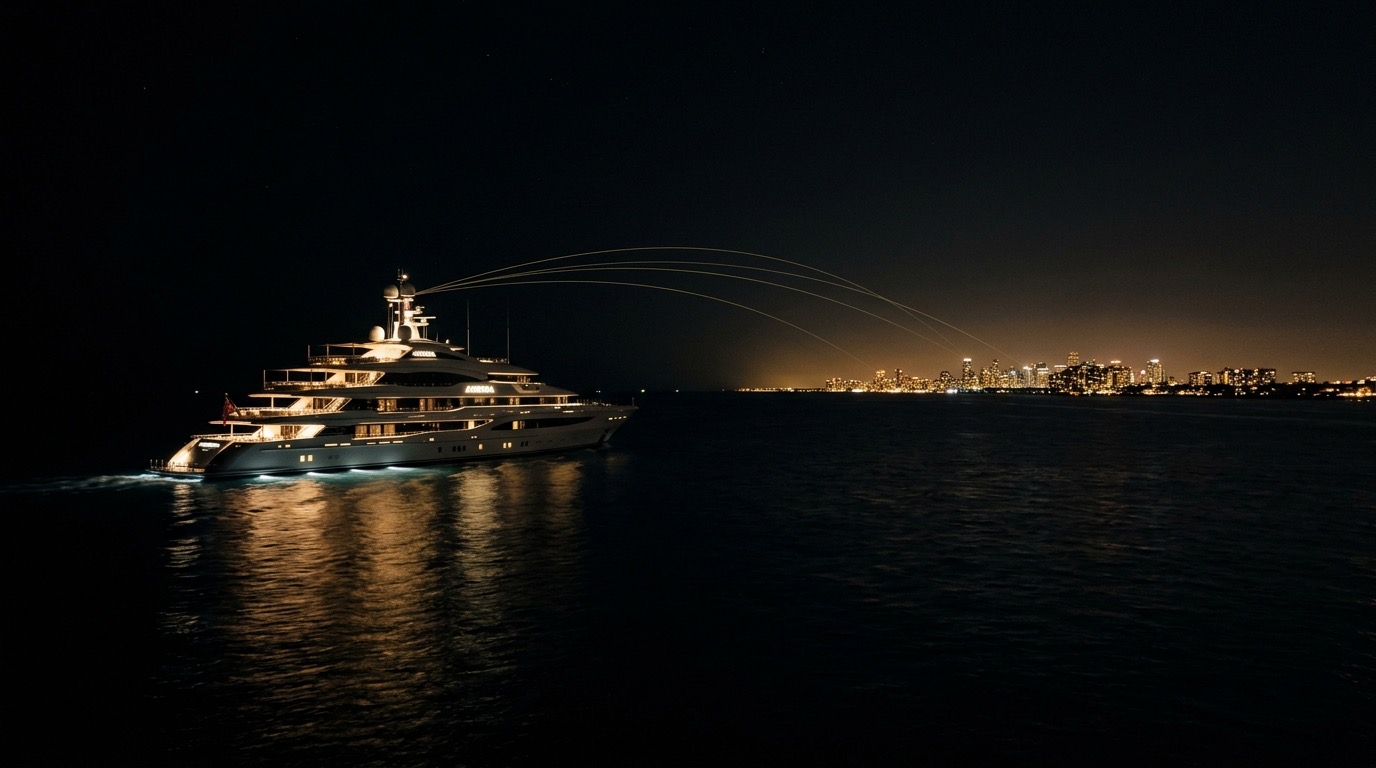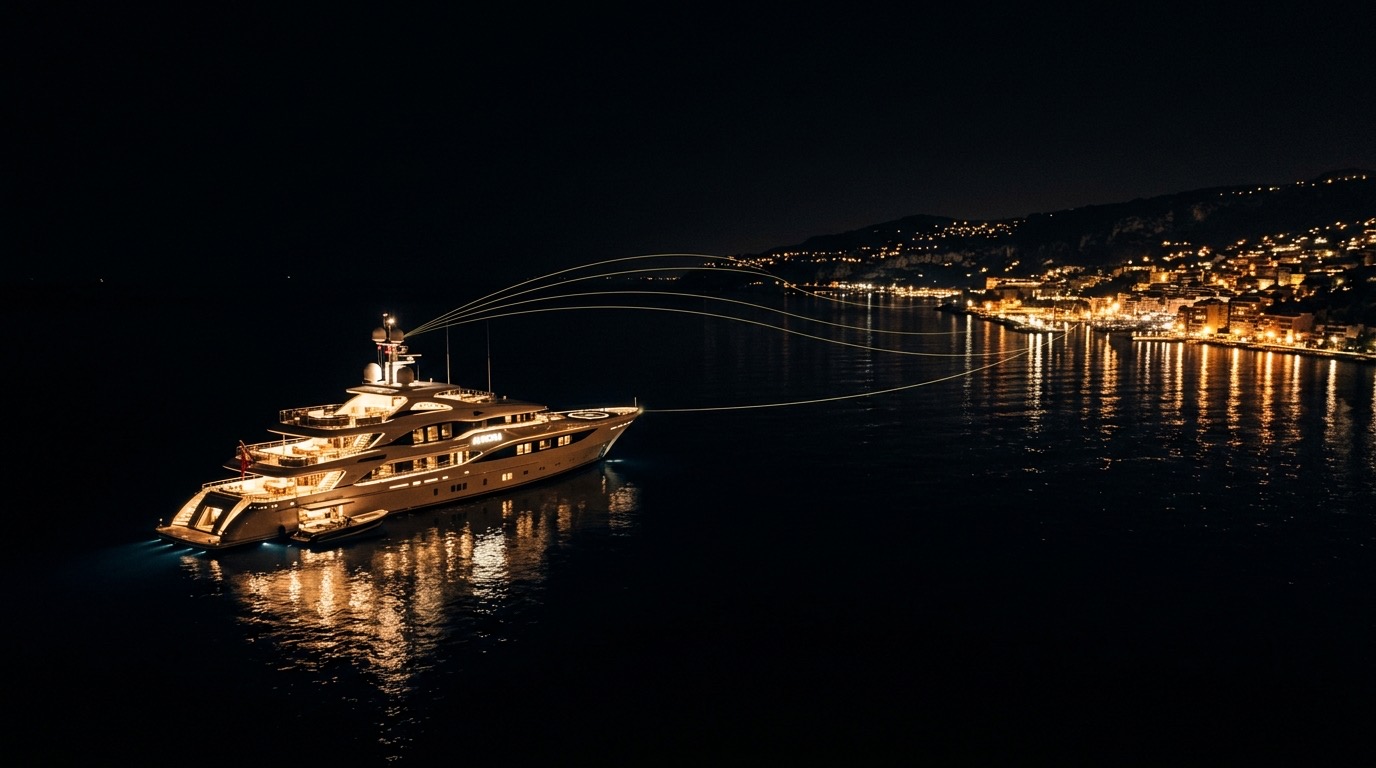
Superyacht IT & Cybersecurity for Hong Kong
In the world's second-largest concentration of ultra-wealthy individuals, a yacht swings at anchor inside one of the densest electronic environments on the planet. Obsidian Helm hardens the vessel — remotely, worldwide, under NDA.
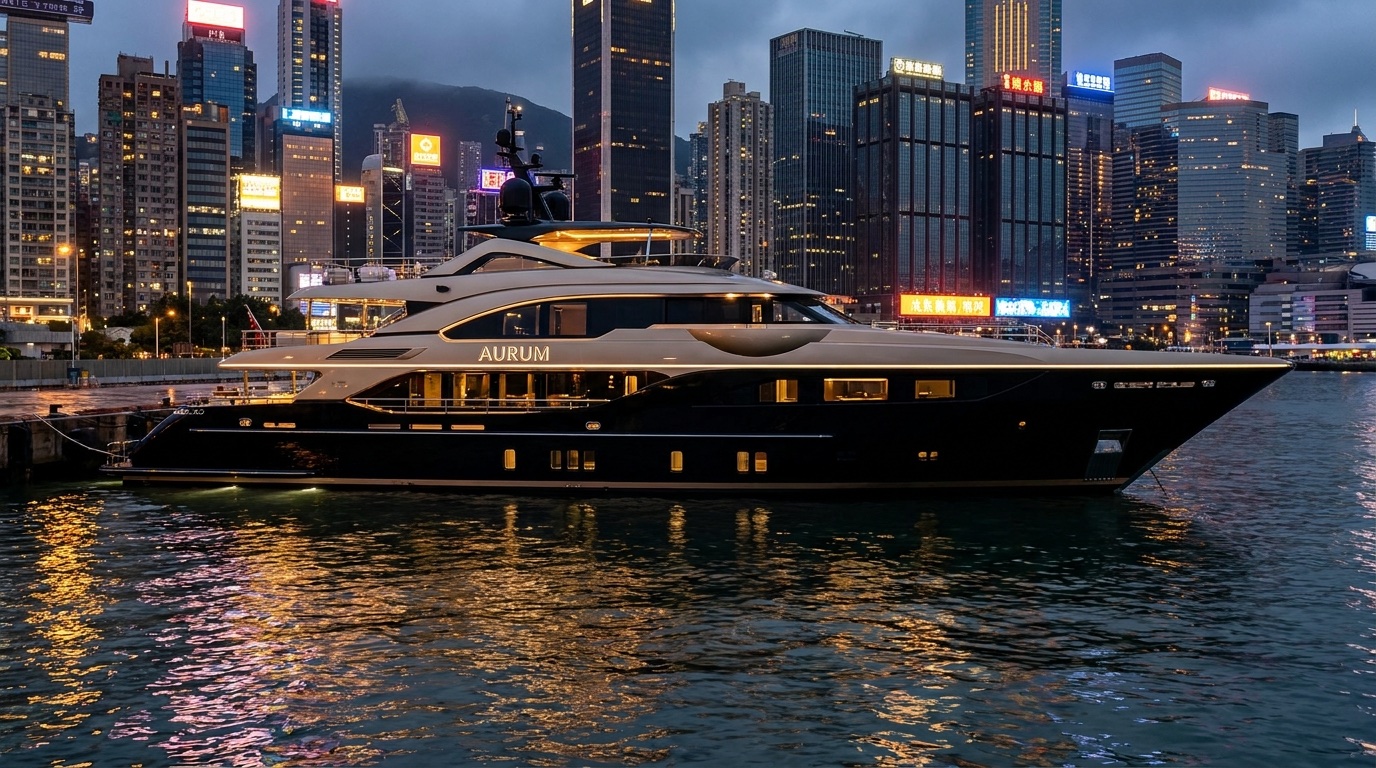
Hong Kong's claim on the world's wealth is no longer a matter of sentiment. Altrata's 2025 World Ultra Wealth Report counted 17,215 ultra-high-net-worth individuals in the territory — a surge of nearly 23 per cent that vaulted Hong Kong past London and Tokyo into second place globally, behind only New York. From The Peak down through Repulse Bay and Deep Water Bay, the southern slopes of Hong Kong Island hold one of the most concentrated stretches of private capital anywhere, and an extraordinary share of it owns a boat.
The water tells the same story under strain. Roughly 12,000 pleasure vessels are registered in Hong Kong, competing for only about 3,000 berths across a dozen marinas. The Gold Coast Yacht & Country Club at Tuen Mun offers some 200 berths and takes yachts up to 70 metres — the territory's true superyacht address — while the Aberdeen Marina Club's 170 berths top out near 30 metres, and the government has now moved to tender a new 200-berth Aberdeen marina for yachts to 50 metres, the first such project in nearly forty years. Larger hulls raft into the Causeway Bay typhoon shelter or swing at anchor off the southside beaches. Every one of them shares a problem that no berth can solve: the airwaves around them.
The Densest Electronic Environment a Yacht Will Ever Enter
A superyacht in mid-ocean is an island; a superyacht in Hong Kong is a node in one of the most saturated radio-frequency environments on earth. Tens of thousands of access points, 5G small cells, commercial shipping traffic and an intensely capable regional signals landscape press against the hull from every direction. Rogue access points that mimic the vessel's Wi-Fi cost nothing to stand up in a harbour this crowded. The yacht's AIS beacon publishes its position to any phone in Causeway Bay. And the principal aboard is rarely a private citizen in the anonymous sense — in a city of 17,215 ultra-wealthy individuals, family names, listed companies and counterparties are known quantities, which makes the yacht's network a precisely targetable extension of the business itself.
Owner, Guest, Crew, Bridge — Never the Same Network
Our remediation begins where most integrators stop. We segment the vessel into four mutually invisible networks — owner, guest, crew and bridge — so that a deckhand's compromised phone, a guest's laptop or a visiting agent's tablet can never touch navigation systems or the owner's communications. Sensitive traffic is encrypted end to end and routed deliberately, a discipline that matters more in this region than almost anywhere else a yacht will cruise. Connectivity is engineered as a bonded mesh: LEO satellite where licensed, Hong Kong's exceptional 5G close inshore, VSAT as deep failover — the same multi-orbit playbook we deploy across the fleet, tuned for South China Sea passages where coverage and jurisdiction change faster than the weather. The principles are set out plainly in our yacht Wi-Fi and connectivity guide; the implementation is anything but generic.
Watching the Vessel So No One Else Can
Segmentation without surveillance is a locked door with no one watching the corridor. Obsidian Helm maintains continuous remote monitoring of the vessel's traffic — flagging anomalous connections, impossible logins and data movements that have no business occurring — from outside the territory, around the clock. The model is deliberately invisible: no technicians at the marina, no branded equipment cases crossing the Aberdeen pontoons, no local vendor with a client list. For families whose corporate affairs span the mainland, Singapore and the West, that quiet externality is not a convenience. It is the point.
In Hong Kong, the question is never whether the yacht can get a signal. It is how many other parties are listening to it.
From The Peak to the Typhoon Shelter, One Perimeter
The yacht is one room in a larger house. The same families keep residences above Repulse Bay or on The Peak, aircraft at Hong Kong International's business apron, and offices in Central — and an adversary will simply enter through the softest of them. Our yacht, jet and estate practice treats the entire footprint as a single defended perimeter under our broader private cybersecurity office, and for owners who cruise south for the winter, the same architecture travels with the boat to Singapore and Phuket without a single configuration left to chance.
Obsidian Helm is the private technology, cybersecurity and AI office of IT Cares Canada, serving principals since 2014 — by invitation, fully remote, worldwide, under NDA. In the harbour with the world's second-largest gathering of ultra-wealthy families, discretion is not a feature of the service. It is the service.
Request the Hong Kong Briefing
Engagement begins with a $4,999 Private Strategy Session — a confidential, fully remote review of your vessel's network, connectivity and electronic exposure in Hong Kong waters, conducted under NDA and credited in full toward membership.
Request Your InvitationFrequently asked
Can you support a yacht based at Gold Coast Yacht & Country Club or Aberdeen?
Yes. We serve vessels throughout Hong Kong waters — Gold Coast at Tuen Mun, the Aberdeen marinas, the Causeway Bay typhoon shelter and yachts at anchor off Repulse Bay or Deep Water Bay. All work is performed remotely in coordination with your captain or ETO, so no outside technicians ever appear at the marina.
Why is Hong Kong considered a high-risk electronic environment for yachts?
Density. The harbour concentrates tens of thousands of access points, 5G cells, commercial shipping and a highly capable regional signals landscape within metres of the hull. Rogue Wi-Fi, AIS tracking and targeted phishing are trivial to mount, and with 17,215 ultra-wealthy residents, owners are identifiable, researched and worth the effort.
Does Starlink work for superyachts in Hong Kong waters?
LEO satellite licensing in Hong Kong differs from open-ocean use, so we never design around a single provider. We build a bonded mesh — local 5G close inshore, licensed satellite services, VSAT failover — that adapts as the vessel moves between Hong Kong, international waters and Southeast Asian cruising grounds without losing security controls.
How does an engagement with Obsidian Helm begin?
With a $4,999 Private Strategy Session: a confidential, remote review of the vessel's network architecture, connectivity and exposure, delivered under NDA with concrete findings and a remediation roadmap. The fee is credited in full toward membership if you proceed. Obsidian Helm operates by invitation and serves a deliberately limited number of principals.