Private Cybersecurity for New York Principals & Family Offices
No city concentrates more ultra-high-net-worth residents than New York — or more people studying them. A discreet, remote cybersecurity and concierge IT office for principals from Billionaires' Row to TriBeCa, operating entirely under NDA.
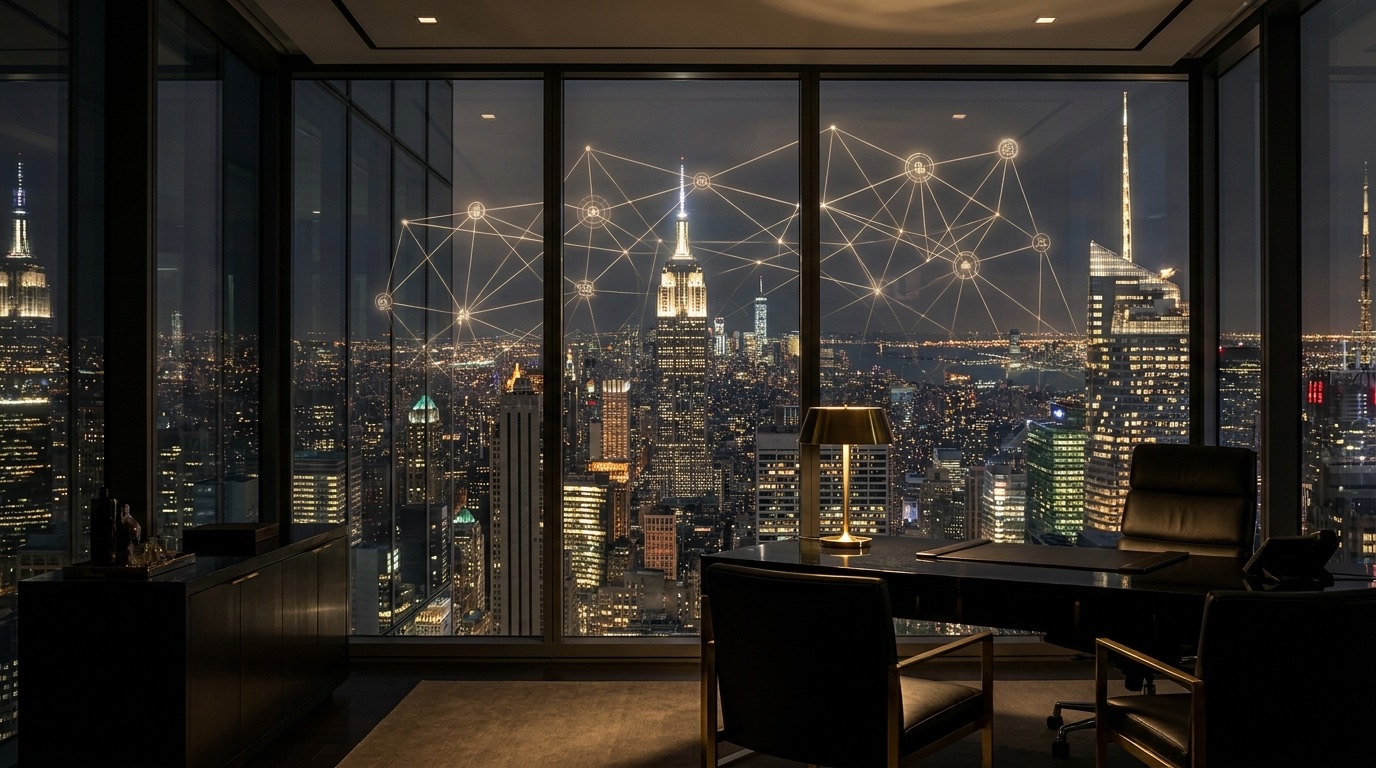
New York is, by a comfortable margin, the wealthiest city on earth: 21,380 ultra-high-net-worth residents — up 23 per cent in a single year and more than any other city — alongside roughly 129 billionaires and the densest cluster of hedge-fund, private-equity and family-office capital ever assembled. Much of it sits within a few square miles: the supertalls of Billionaires’ Row, the limestone townhouses of the Upper East Side, the cast-iron lofts of TriBeCa, and the family-office floors stacked through Midtown and Hudson Yards.
The threat picture matches the geography. Deloitte’s Family Office Cybersecurity Report found North American family offices the most attacked in the world — 57 per cent reported a cyberattack within the preceding 12–24 months, against 41 per cent in Europe — rising to 62 per cent for offices managing over a billion dollars. New York principals are not incidental victims of broad campaigns; they are named targets. A fund founder’s SEC filings, a co-op board dispute reported in the property press, a teenager’s geotagged feed and a leaked courier database assemble, together, into a working dossier — and in this city, dossiers get used.
Wire fraud at family-office scale
The economics are simple: a Midtown family office moves more money with fewer controls than almost any regulated institution its size. The template attack is the one that cost the engineering firm Arup $25 million — a video call on which every participant, including the CFO, was an AI-generated deepfake, followed by fifteen authorised wire transfers. Deloitte projects generative-AI-enabled fraud in the United States alone will reach $40 billion by 2027. For a principal whose voice exists in hours of CNBC hits, conference panels and earnings calls, thirty seconds of clean audio is all a cloning model needs to phone the office and move the closing funds. The countermeasures are procedural as much as technical — out-of-band verification, payment ceilings, rehearsed challenge protocols — the discipline we detail in deepfake protection for executives and AI cybersecurity for family offices.
The doorman is not a firewall
New York principals often assume the building handles security — and for the lobby, it does. But the doorman cannot see the penthouse Wi-Fi. A full-floor apartment on Billionaires’ Row or a converted TriBeCa loft is a small enterprise network: automation, shades and climate from an AV integrator with no security mandate, CCTV that phones home to an offshore cloud, the housekeeper’s phone, the trainer’s iPad, the contractor’s remote access left open since the renovation — all routinely on one flat network with the laptop that approves capital calls. An Upper East Side townhouse adds its own exposure: a private facade on a public street, deliveries, staff turnover, and smart systems reachable from the sidewalk. We design segmented, monitored residence networks — the approach in our guide to smart-home security for luxury estates — and hold every property in the portfolio to the same standard.
The dossier already exists
For most New York principals the research phase is already complete. Decades of breach data tie family names to home addresses, old passwords and cell numbers; criminal forums trade these files the way Midtown trades credit. The cell number is the sharpest edge — a SIM-swap against a principal’s phone defeats the text-message codes protecting brokerage and banking in minutes, which is why SIM-swap protection and continuous dark-web monitoring sit in the first phase of every New York engagement. You cannot delete the dossier; you can know its contents before someone acts on them, and quietly invalidate everything in it that still works.
In Manhattan, wealth is not hidden — it is published, filed, photographed and indexed. The only real variable is whether the family controls the picture or the adversary does.
Why remote, and why under NDA
The reflex is to hire locally — the firm the building recommends, the one the fund next door uses. But UHNW New York is a small town wearing a big city: local vendors serve competing funds and neighboring families, technicians talk, and an office in the city is one more place your floor plans and credentials physically live. Obsidian Helm operates fully remotely, worldwide, under NDA — no local bench trading stories at dinner, no shared clients on your street, one accountable team across cybersecurity and concierge IT for the principal, the family, the residences and the office. Operated by IT Cares Canada since 2014, the model exists for exactly one client profile: families for whom discretion is not a preference but a requirement.
The first conversation
Engagement opens with a Private Strategy Session: a confidential, principal-level mapping of the family’s real exposure — digital footprint, residence networks across the city and beyond, payment pathways, staff and household devices — concluding in a prioritised plan. In the city with the largest concentration of private wealth in history, the families that fare best are the ones who treated their digital affairs like their legal affairs: privately, professionally, and before the event.
A private cybersecurity office for New York principals
Begin with a $4,999 Private Strategy Session — a confidential, principal-level review of your family's digital exposure, conducted remotely under NDA and credited in full toward membership.
Request Your InvitationFrequently asked
Why are New York family offices targeted by cybercriminals?
New York concentrates 21,380 ultra-wealthy residents and the world's densest hedge-fund and family-office cluster, and family offices move large sums with fewer controls than banks. Deloitte found 57 percent of North American family offices were attacked within 12 to 24 months — the highest rate globally — with deepfake-enabled wire fraud the fastest-growing threat.
Doesn't a doorman building already protect a Manhattan principal?
The building protects the lobby, not the network. A penthouse or townhouse typically runs automation, cameras, staff devices and contractor remote access on one flat network alongside the laptop that approves wires. Building security has no visibility into any of it, which is why residence network design is a core part of private cybersecurity.
What is a deepfake wire-fraud attack on a family office?
Criminals clone a principal's or CFO's voice and likeness from public audio and video, then call or video-conference the office to authorize urgent transfers. One firm lost $25 million this way after a call where every participant was synthetic. Defenses combine out-of-band verification rituals, payment ceilings and rehearsed challenge protocols for staff.
How much does private cybersecurity for a New York family cost?
Obsidian Helm engagement begins with a $4,999 Private Strategy Session — a remote, NDA-covered, principal-level review of the family's digital footprint, residences, payment pathways and staff devices, delivered as a prioritized plan. The full fee is credited toward membership if the family proceeds, making the session effectively free for members.