Superyacht Technology on the Greek Islands Circuit
From Flisvos to Tourlos, the Cyclades reward the prepared. A discreet examination of connectivity, cybersecurity and digital privacy for owners and charterers cruising Greece.
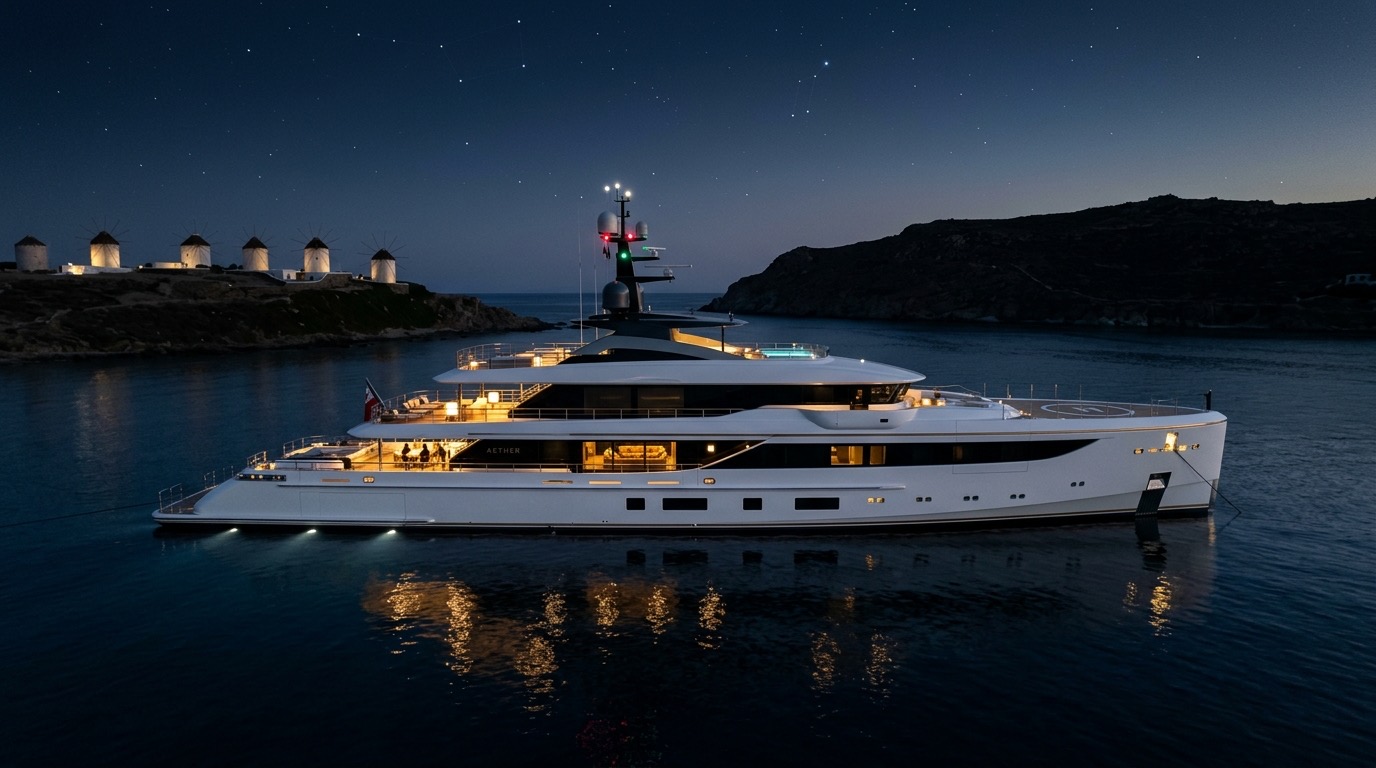
Greece has quietly become the Mediterranean's most demanding superyacht theatre. Roughly 90 per cent of the Greek charter fleet homeports in Athens, where Flisvos Marina — the country's only large-scale berthing for vessels up to 180 metres — sits alongside Zea's 670 slips and Athens Marina's 130. From there the season flows east into the Cyclades, with Mykonos as its gravitational centre: Tourlos, the island's New Port, offers 222 berths, while the old harbour's Mykonos Marina holds 30 berths for yachts to 40 metres. Between May and October, and acutely so in July and August, prime berths are secured months in advance.
What is rarely secured with equal foresight is the vessel's digital posture. A 60-metre yacht arriving off Mykonos carries an owner's office, a guest party of considerable public interest, a crew of twenty with personal devices, and bridge systems that increasingly resemble enterprise infrastructure. It also carries every weakness those systems acquired in winter refit. The Aegean's meltemi tests ground tackle; the Aegean's marinas test networks.
The Cyclades Problem: Beautiful, Crowded, Exposed
The charter circuit — Athens, Kea, Syros, Mykonos, Paros, Santorini — concentrates extraordinary wealth into small anchorages for a short season. Marina Wi-Fi, pop-up beach-club networks and shoreside SIM infrastructure are precisely the environments in which credential harvesting and device compromise flourish. A principal who would never join a hotel network without protection will, in August off Psarou, watch guests stream from a yacht network that was last audited when the boat left the yard.
The correct architecture is unglamorous and absolute: full network segmentation between owner, guest, crew and bridge. The owner's traffic is encrypted end-to-end and never shares a broadcast domain with a deckhand's social feed; navigation, AIS and engineering systems are isolated from anything that touches the internet at large. We design and operate this remotely — no technicians aboard, no visible team, nothing for a charter guest or paparazzo to notice. The same discipline that governs crew network design governs the season itself.
Connectivity Where the Postcard Ends
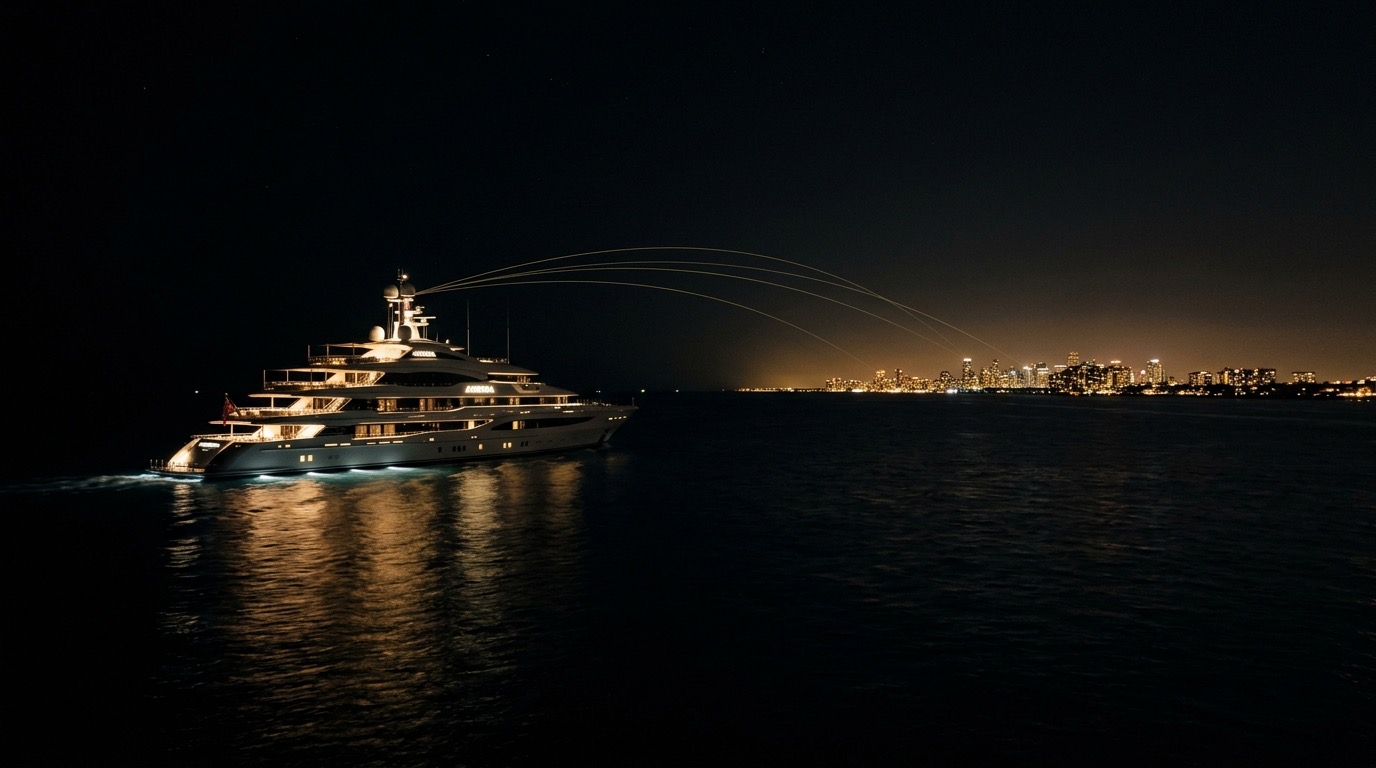
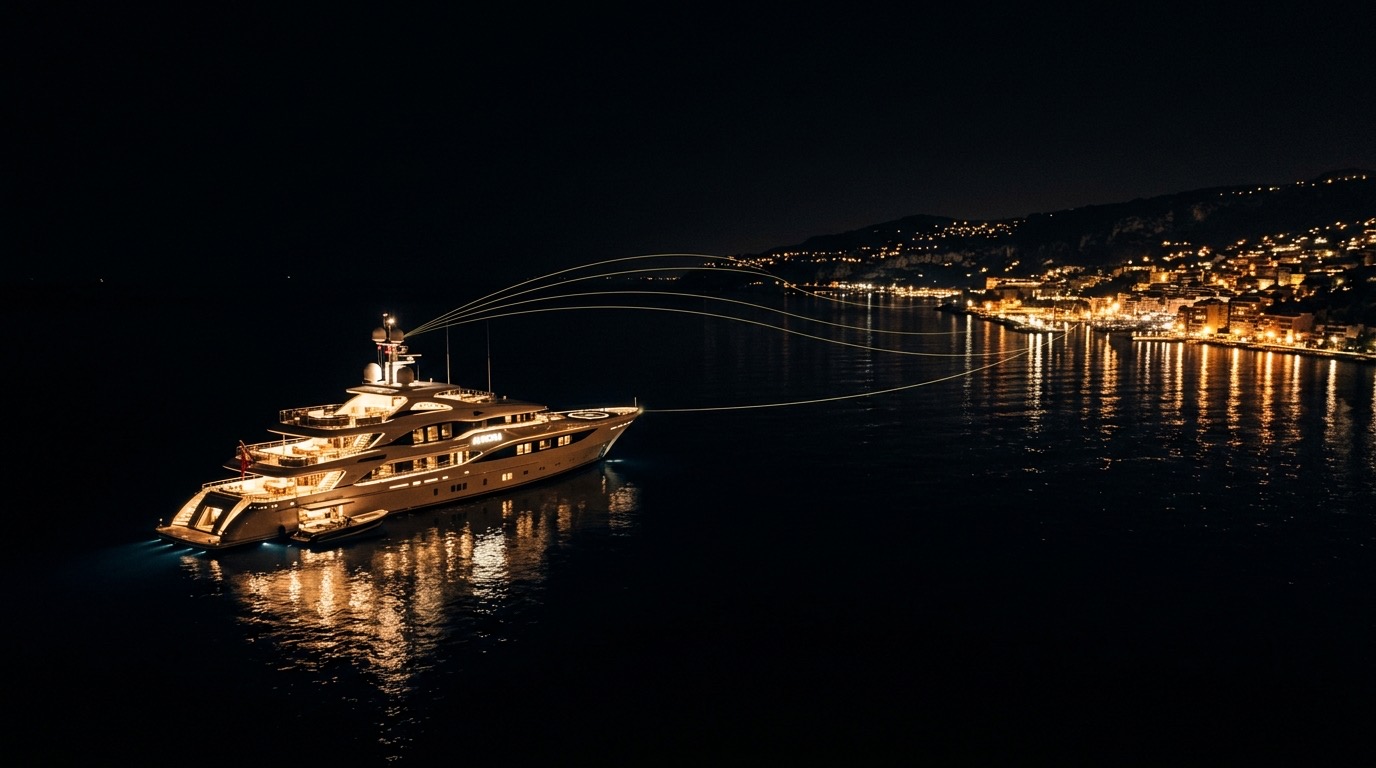
Mykonos town enjoys respectable shoreside bandwidth; the anchorages of Rineia, Koufonisia or southern Folegandros do not. Modern practice is LEO-first: Starlink as the primary path, bonded with local 5G where it exists and VSAT held as the disciplined fallback — a layered approach we set out in our review of Starlink at sea. The art is not the antenna; it is the failover logic, the traffic shaping that keeps the owner's video call pristine while guest devices saturate the link, and the encrypted tunnel that makes the uplink useless to anyone listening between the yacht and the family office.
The Charter Turnaround Is the Threat Window
Greece runs on back-to-back charters. Every turnaround day in Tourlos or Flisvos brings provisioners, day workers, AV contractors and a new guest party — each a fresh set of devices, each a fresh opportunity for something unwanted to join the network. Between charters we remotely sweep the vessel's networks, rotate guest credentials, verify that no rogue device has persisted, and re-baseline the monitoring that will quietly watch the next fortnight. The captain receives a single, plain-language note; the guests receive flawless Wi-Fi and nothing else.
In the Cyclades, the wind is the only thing that should know your position before you do.
Privacy Under the Brightest Light in the Aegean
Mykonos in high season is a photographed island. AIS aggregators, drone operators and the simple sociology of a famous anchorage mean a yacht's movements are public unless deliberately managed. We advise on AIS posture within the law, harden crew devices and social-media practice, and monitor for the leakage that typically precedes an approach — a deck photo geotagged, an itinerary mentioned in a beach club. The same threat logic applies in the air; we treat the aircraft and the yacht as one estate, as discussed in our note on jet and yacht cybersecurity.
One Standard From Piraeus to Porto Cervo
Owners rarely cruise Greece alone; the season typically threads the wider Mediterranean circuit, and the vessel's technology should behave identically in every jurisdiction. Our work is delivered entirely remotely, worldwide, under NDA — an extension of the broader yacht, jet & estate practice we maintain for principals whose exposure does not pause for August. Monitoring is continuous and silent; escalation reaches one named person; nothing about the arrangement is visible aboard.
Greece rewards those who arrive prepared — with a berth reserved in March, a captain who knows the meltemi, and a network that was hardened before the first guest stepped onto the passerelle. The islands will provide the rest.
Before the Season Opens
Engagement begins with a $4,999 Private Strategy Session — a confidential review of your vessel's connectivity, segmentation and exposure, credited in full toward membership. Remote, worldwide, under NDA.
Request Your InvitationFrequently asked
Is yacht Wi-Fi in Mykonos safe for owners and guests?
Only if the vessel's network is properly segmented. Crowded anchorages and marina or beach-club Wi-Fi around Mykonos are prime environments for credential theft. Owner, guest, crew and bridge traffic should run on isolated networks with encrypted uplinks, so a compromised guest device or shoreside hotspot can never reach the owner's communications or navigation systems.
How good is internet connectivity when cruising the Cyclades?
Excellent near Athens and Mykonos town, patchy in remote anchorages. The reliable approach is Starlink as the primary link, bonded with Greek 5G where coverage exists and VSAT as fallback, with automatic failover and traffic shaping so the owner's calls stay flawless even when a full guest party is streaming at anchor.
When is the superyacht season in Greece?
The cruising season runs May through October, with July and August as the crowded peak around Mykonos and the Cyclades. Prime berths at marinas such as Tourlos and Flisvos are booked months ahead, and the same advance planning should apply to network audits, credential rotation and cybersecurity hardening before the first charter.
Can superyacht IT and cybersecurity be managed without technicians on board?
Yes. A properly architected vessel can be monitored, patched and swept entirely remotely over its satellite and cellular links. Turnaround-day checks, guest credential rotation and continuous threat monitoring all happen invisibly, with no visible team aboard, which most owners prefer for both discretion and charter-guest experience.