Private Cybersecurity for London Principals & Family Offices
The capital's wealth is concentrated into a handful of postcodes — and so is the attention of those who study it. A discreet, remote cybersecurity and concierge IT office for principals from Mayfair to Hampstead, operating entirely under NDA.
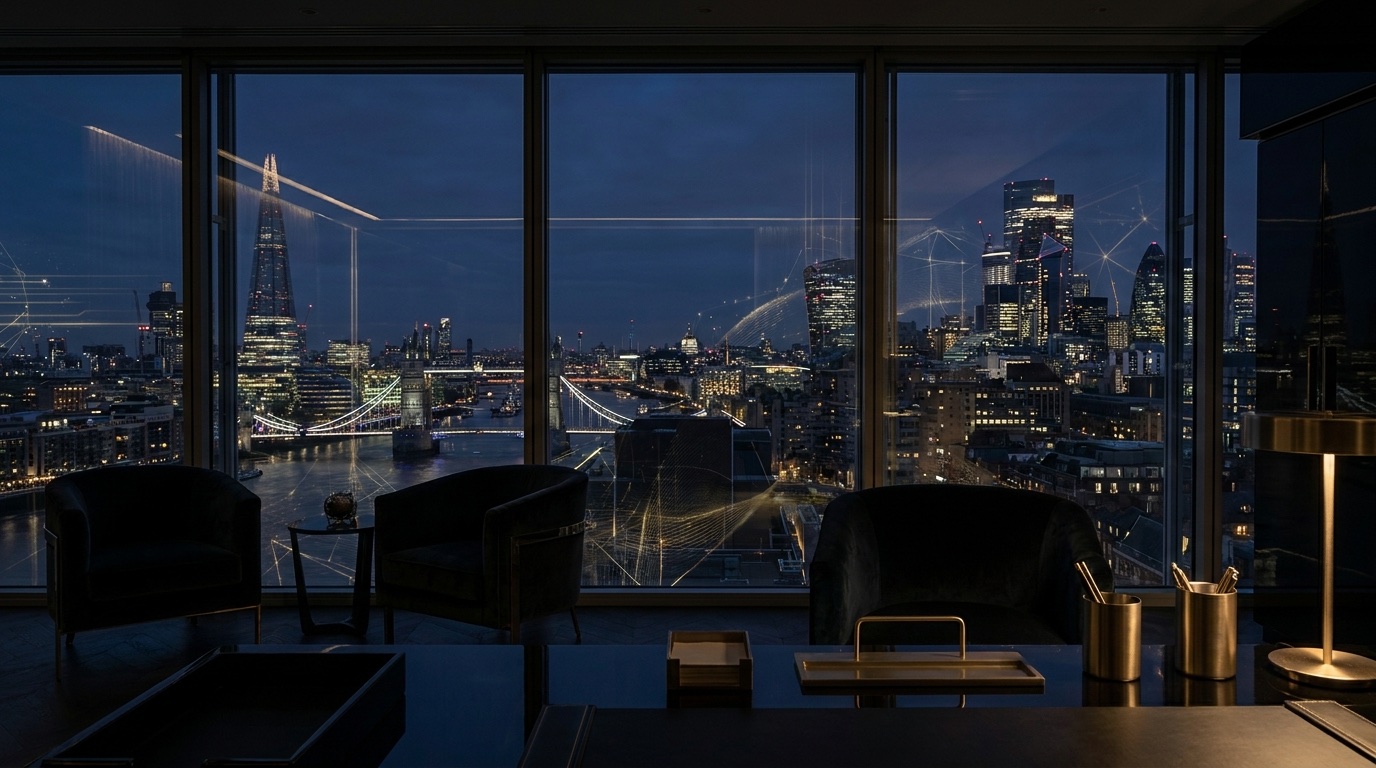
London remains the densest concentration of private wealth in Europe: roughly 15,800 ultra-high-net-worth residents and 97 billionaires keep a home in the capital, and about a third of the United Kingdom’s 259 registered single-family offices operate within a short walk of the West End core — Mayfair and St James’s above all. More telling still, some $179 billion of the assets those London offices steward belongs to families living abroad: non-doms weighing relocation, returning expatriates, global principals for whom a Mayfair address is the front door to everything else they own.
That density is precisely the problem. The same square mile that houses the family offices also houses the people who study them. Deloitte’s Family Office Cybersecurity Report found that 43 per cent of family offices worldwide were hit by a cyberattack within the preceding 12–24 months, a quarter of them three times or more — and for offices managing over a billion dollars, the figure climbs to 62 per cent. In London, the attack rarely opens with code. It opens with a name, an address in Belgravia, and a pattern of life assembled patiently from open sources.
When burglary gangs read like intelligence analysts
The Metropolitan Police now runs targeted patrols in Lower Belgravia precisely because residential burglary there is organised, not opportunistic. The gangs that have worked Knightsbridge and Belgravia in recent years — including the crews behind smash-and-grab raids on Knightsbridge boutiques — prepare the way an analyst would: Companies House filings, planning applications that publish the floor plan of a basement extension, society photography, geotagged posts from a teenager’s account, the staff rota inferred from when the lights come on in Hampstead. This is OSINT — open-source intelligence — and it is the connective tissue between a family’s digital footprint and a physical event at their door. Reducing that footprint is cybersecurity work, even when the threat carries a crowbar rather than a keyboard.
Wire fraud and the cloned voice
The financial attacks are quieter and far more expensive. The pattern that should concern every London family office is the one that cost the engineering firm Arup $25 million in Hong Kong: a finance employee joined a video call on which every participant — including the CFO — was an AI-generated deepfake, then executed fifteen wire transfers. Family offices are smaller, flatter and more trusting than any engineering firm, and a recent industry survey found 83 per cent of them now worry about deepfake and impersonation campaigns aimed at their principals. A cloned voice asking a Mayfair office to “move the completion funds today” needs perhaps thirty seconds of sampled audio from a conference panel or a charity gala film. We build the countermeasures — out-of-band verification rituals, payment controls, staff drills — described in our work on deepfake protection for executives and AI-era cybersecurity for family offices.
The residence is the network
A stucco-fronted Belgravia townhouse or a lateral apartment off a Chelsea garden square is, in network terms, a small enterprise: automated lighting and blinds, CCTV and entry systems, a cinema, the housekeeper’s tablet, the security contractor’s remote access, the children’s consoles, and frequently a home office from which positions are moved. Most were wired by an AV integrator with no security mandate, on one flat network where the smart doorbell can see the trading laptop. We design segmented, quietly monitored residence networks — the discipline set out in our guide to smart-home security for luxury estates — and we extend the same standard across the portfolio, because the principal who is careful in Knightsbridge is often exposed through the staff annexe in the country.
The dossier already exists
For most London principals, the uncomfortable truth is that a working dossier already circulates: credentials from old data breaches tied to a family surname, a home address leaked from a courier database, a director’s service address that resolves to the family kitchen. Criminal forums trade these fragments the way Mayfair trades art — quietly, between people who know what they are looking at. Continuous dark-web monitoring for UHNW families does not make the dossier vanish; it tells you what is in it before someone acts on it, which is the difference between a controlled correction and a crisis.
In London, discretion is not an amenity. It is the perimeter. The family that cannot be researched cannot be efficiently targeted — and almost everything that makes a family researchable is fixable.
Why remote, and why under NDA
The instinct is to hire someone local — a firm with an office in the West End, perhaps the one the neighbours use. Consider what that means in a village as small as UHNW London: engineers who dine out on anonymised war stories, account managers who move between competing family offices, an office through which your floor plans, passwords and family arrangements physically pass. Obsidian Helm was built the other way. We operate fully remotely, worldwide, under NDA, with no local staff to chat at dinner parties and no office for your file to sit in. The same private office covers cybersecurity and concierge IT — one accountable team for the principal, the family, the residences and the office, rather than four vendors who each see a quarter of the picture.
The first conversation
Engagement begins, as it should, quietly: a Private Strategy Session in which we map the family’s actual exposure — digital footprint, residence networks, payment pathways, staff devices — and put a prioritised plan in front of the principal. No audit theatre, no junior team, no list of your neighbours as references. For a city of 15,800 ultra-wealthy residents, the families that handle this well share one habit: they treated their digital affairs as seriously as their legal ones, before events forced the issue.
A private cybersecurity office for London principals
Begin with a $4,999 Private Strategy Session — a confidential, principal-level review of your family's digital exposure, conducted remotely under NDA and credited in full toward membership.
Request Your InvitationFrequently asked
Why do London family offices need private cybersecurity?
London hosts roughly a third of the UK's 259 single-family offices alongside 15,800 ultra-wealthy residents, making it one of the most studied wealth clusters on earth. Deloitte found 43 percent of family offices suffered a cyberattack within 12 to 24 months, and London offices face added exposure from OSINT-driven burglary gangs and wire-fraud crews targeting West End addresses.
How do criminals target wealthy London residents online?
Most attacks begin with open-source research: Companies House filings, planning applications showing floor plans, society photography, geotagged family social media and leaked databases. Criminals combine these into a pattern-of-life dossier used for burglary, impersonation or wire fraud. Reducing this researchable footprint is the first and highest-value step in protecting a London principal.
Is a remote cybersecurity provider safer than a local London firm?
Often, yes. UHNW London is a small village: local vendors serve neighbouring families, staff circulate between firms, and offices physically hold sensitive client material. A fully remote office operating under NDA, with no local staff and no shared social circle, removes the gossip and conflict-of-interest channel entirely while delivering the same or deeper technical capability.
What does the Obsidian Helm Private Strategy Session cost?
The Private Strategy Session is $4,999, conducted remotely under NDA at principal level. It maps the family's digital footprint, residence networks, payment pathways and staff-device exposure, then delivers a prioritised protection plan. The full fee is credited toward membership if the family proceeds, so the session effectively costs nothing for members.